
 Français
 Español
 Deutsch
 English
Study, Floodlights, Poles and Supports
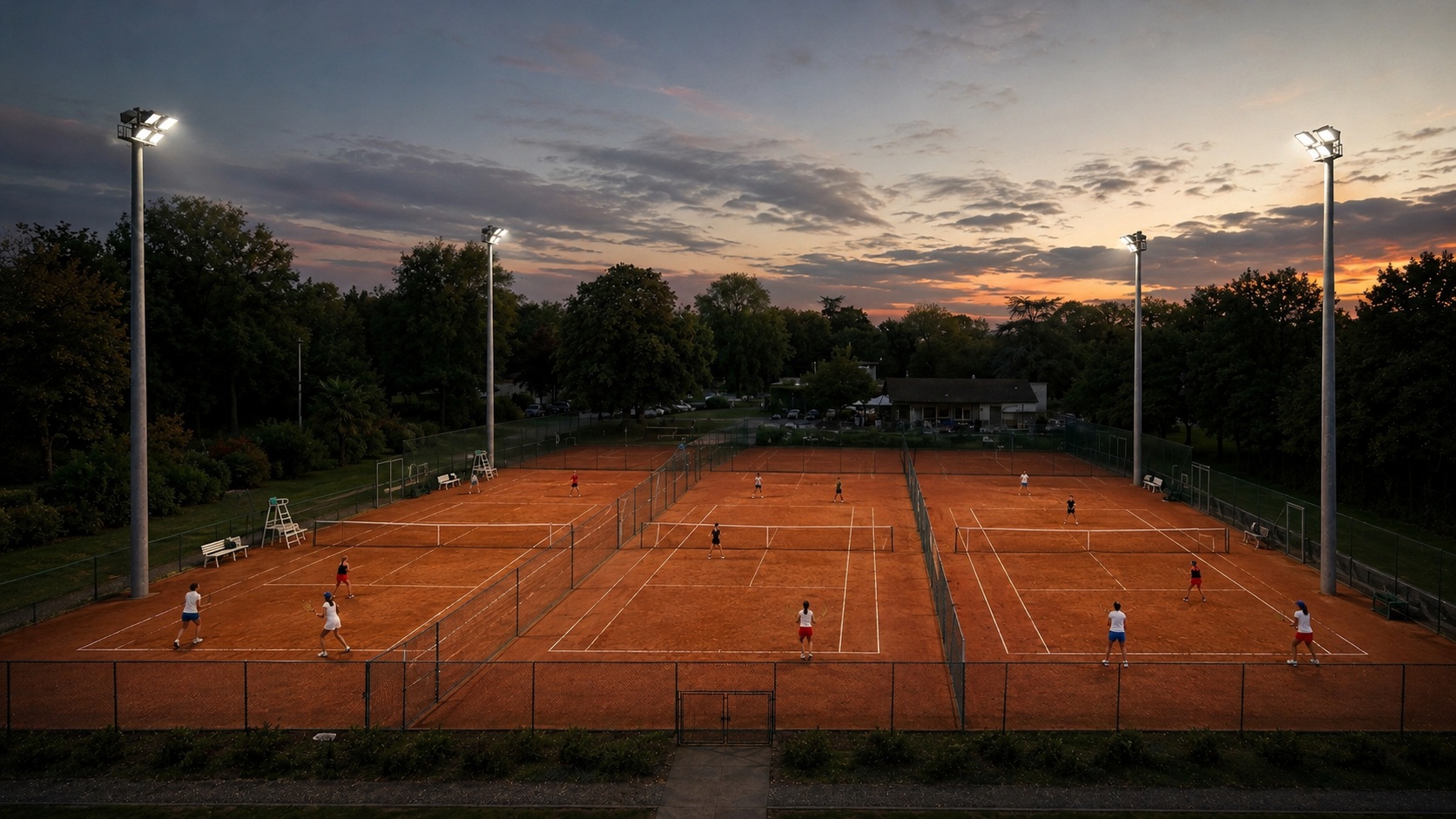
LED Lighting for Outdoor Tennis Courts
STADÉLUM studies the site dimensions, setbacks, pole heights, optics, uniformity, glare and installed power before proposing a configuration.
The Challenge
Light the Game Without Oversizing the Installation
A correct average lux level is not enough if the back areas are poorly lit, if uniformity is insufficient or if players look directly into the floodlights during play.
The study links the number of courts, geometry, pole height and setback, photometric distribution and the light likely to spill outside the site.
Simulated Typical Studies
Three Configurations Depending on the Number of Courts
Single Outdoor Court
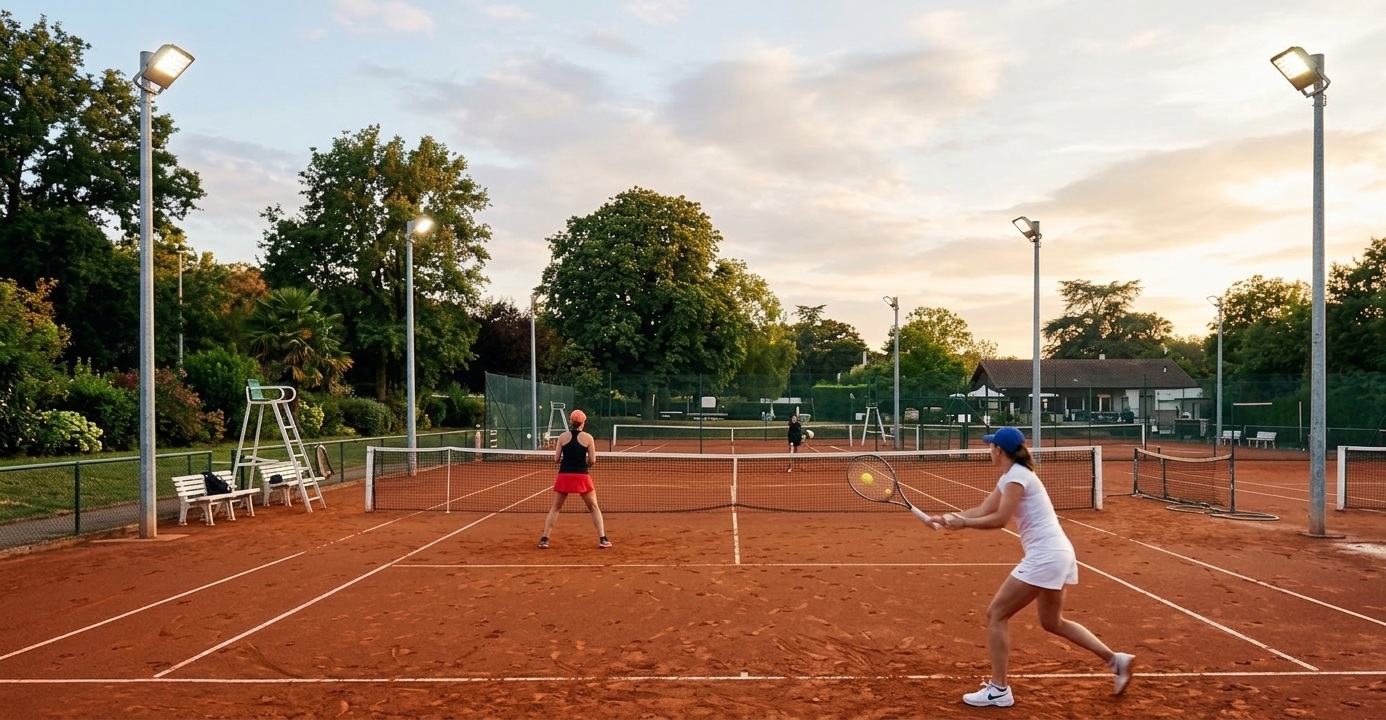
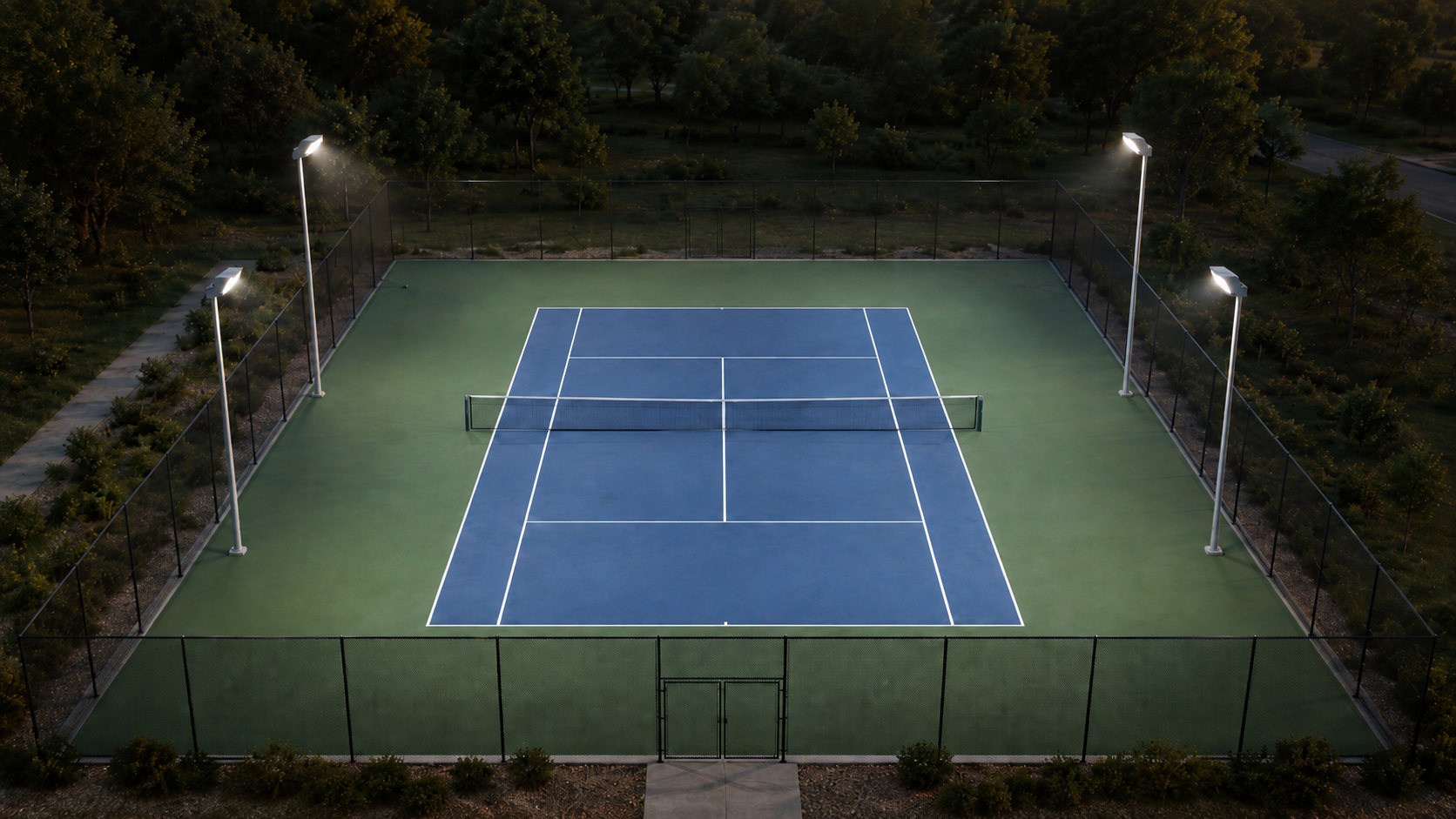
LED lighting for a single outdoor tennis court over an area of 36 × 18 metres.
- Type
- Single court
- Dimensions
- 36 × 18 m
- Number of poles
- 4
- Floodlights
- 4 × SMASH 500 W
- Height
- 10 m
- Setback
- 3.5 m
Simulated photometric calculation
Double Outdoor Court
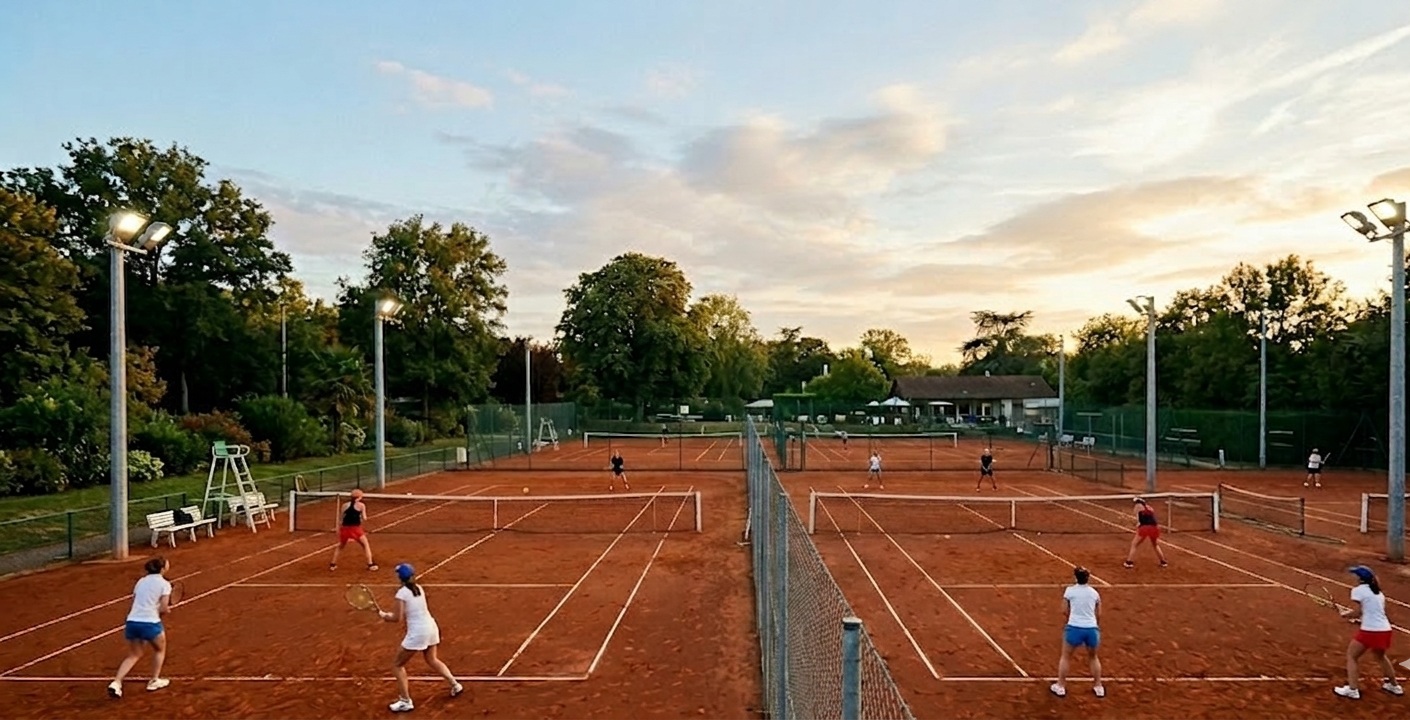
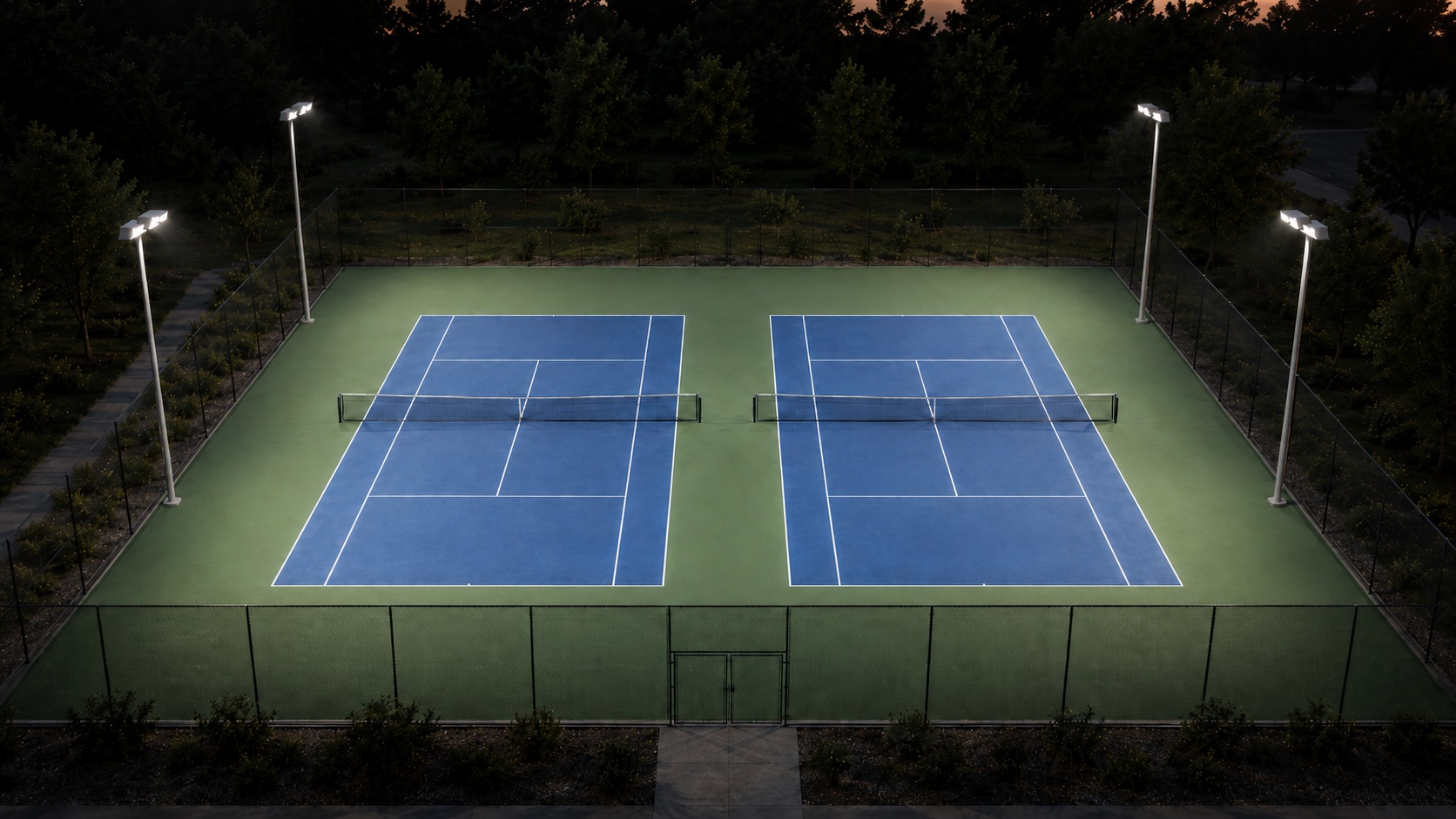
LED lighting for two outdoor tennis courts over an area of 36 × 34 metres.
- Type
- Double court
- Dimensions
- 36 × 34 m
- Number of poles
- 4
- Floodlights
- 8 × SMASH 500 W
- Height
- 10 m
- Setback
- 3.5 m
Simulated photometric calculation
Triple Outdoor Court
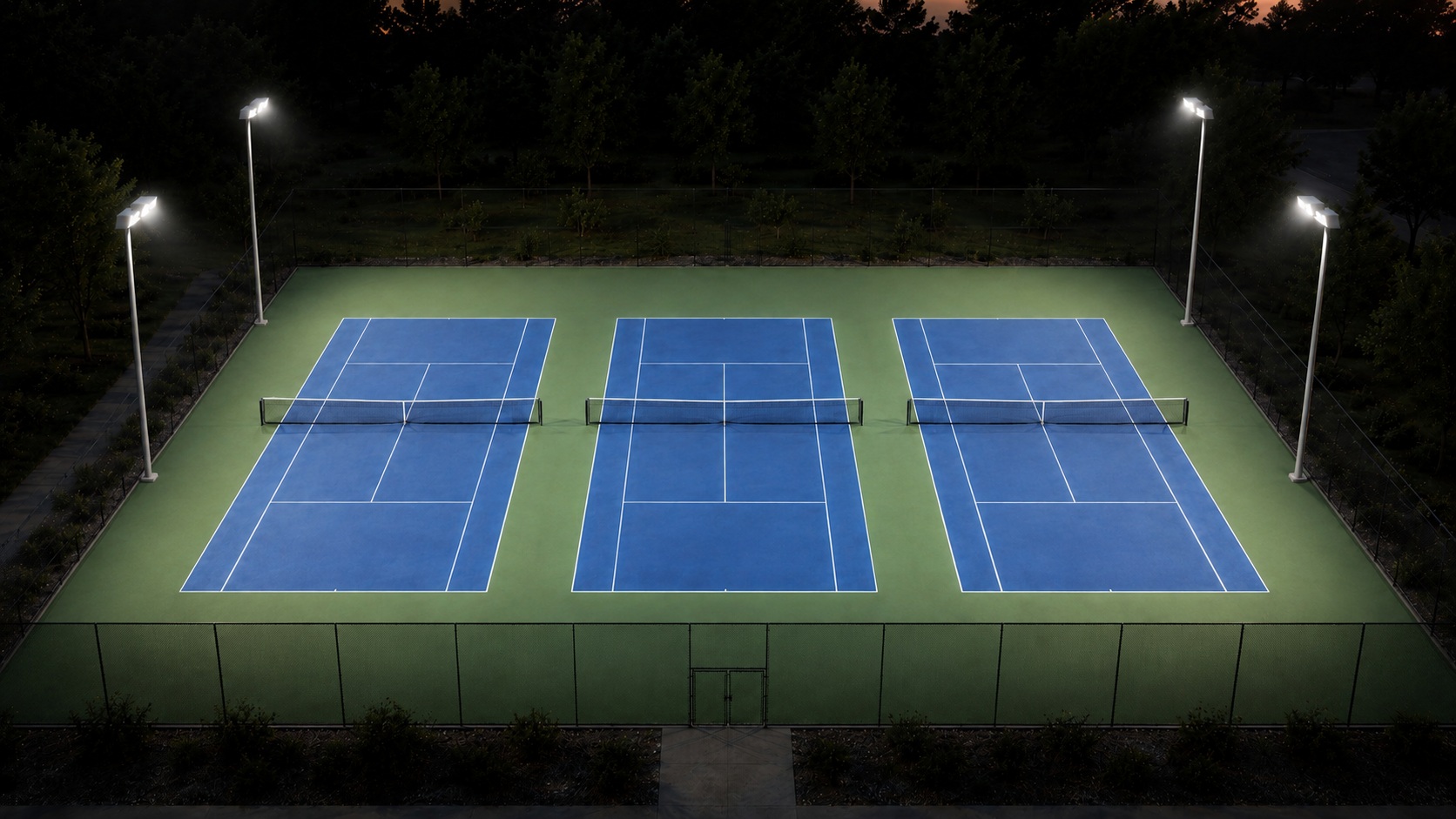
LED lighting for three outdoor tennis courts over an area of 36 × 51 metres.
- Type
- Triple court
- Dimensions
- 36 × 51 m
- Number of poles
- 4
- Floodlights
- 4 × ARENA 1800 W
- Height
- 16 m
- Setback
- 3.5 m
Simulated photometric calculation
Technical Comparison of the 3 Solutions
| Specifications | Single Outdoor Court | Double Court — SMASH | Triple Court — ARENA |
|---|---|---|---|
| Installation type | Single court | Double court | Triple court |
| Dimensions | 36 × 18 m | 36 × 34 m | 36 × 51 m |
| Number of poles | 4 | 4 | 4 |
| Product | SMASH 500 W | SMASH 500 W | ARENA 1800 W |
| Number of floodlights | 4 | 8 | 4 |
| Mounting height | 10 m | 10 m | 16 m |
| Setback | 3.5 m | 3.5 m | 3.5 m |
| Simulated average illuminance | ≥ 320 lux | ≥ 310 lux | ≥ 320 lux |
| Simulated uniformity | > 0.79 | > 0.72 | > 0.80 |
Simulated values to be confirmed by a photometric study adapted to the actual site configuration.
Calculation Methodology
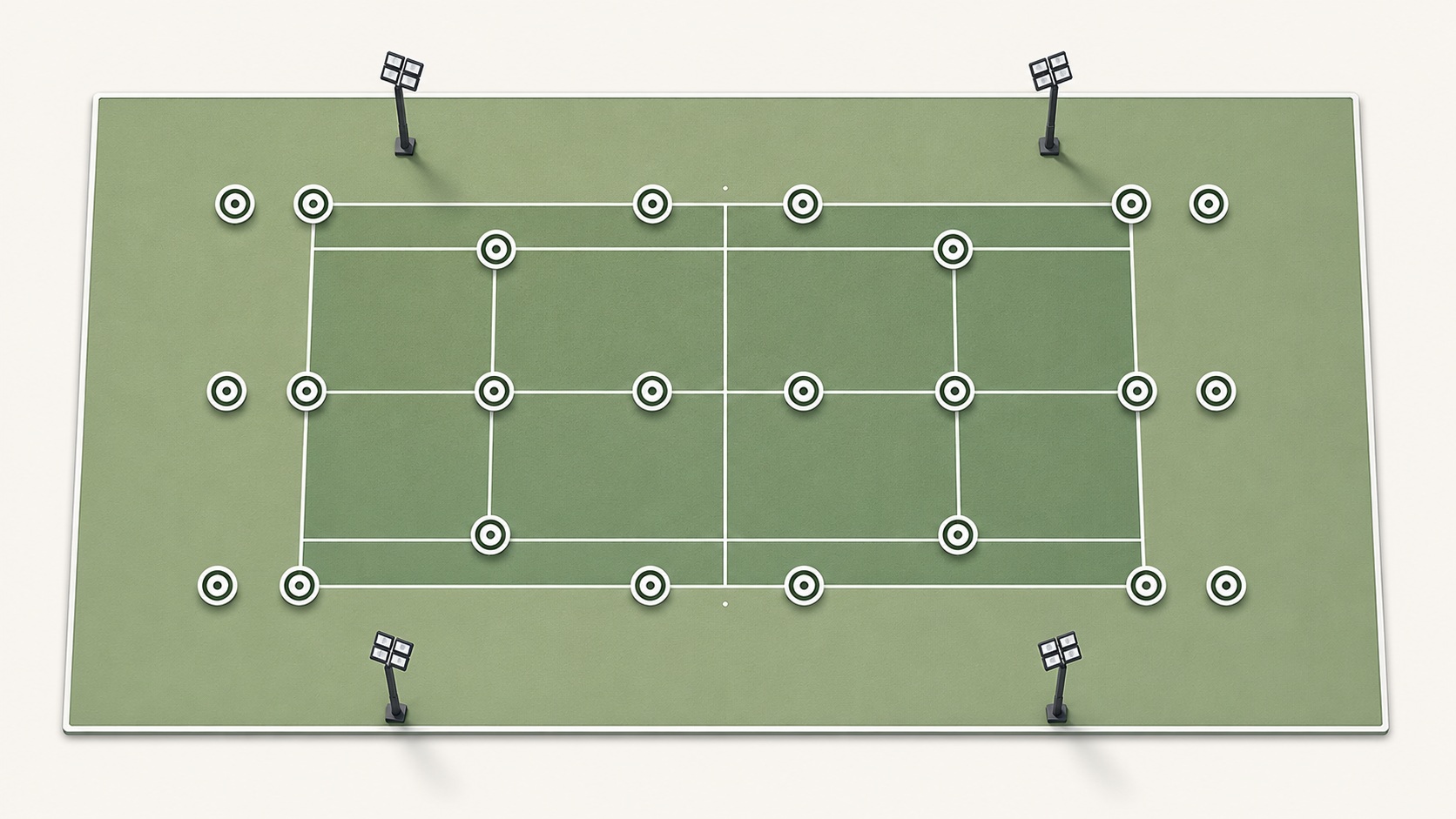
Illuminance and uniformity performance are assessed using a photometric study that takes into account the court geometry, pole layout, mounting height, floodlight power and light distribution across the entire playing area.
Calculation points taken at ground level make it possible to check lighting consistency across the court, clearance areas and areas sensitive to glare.
Floodlights
Choose SMASH or ARENA STADIUM According to the Required Throw
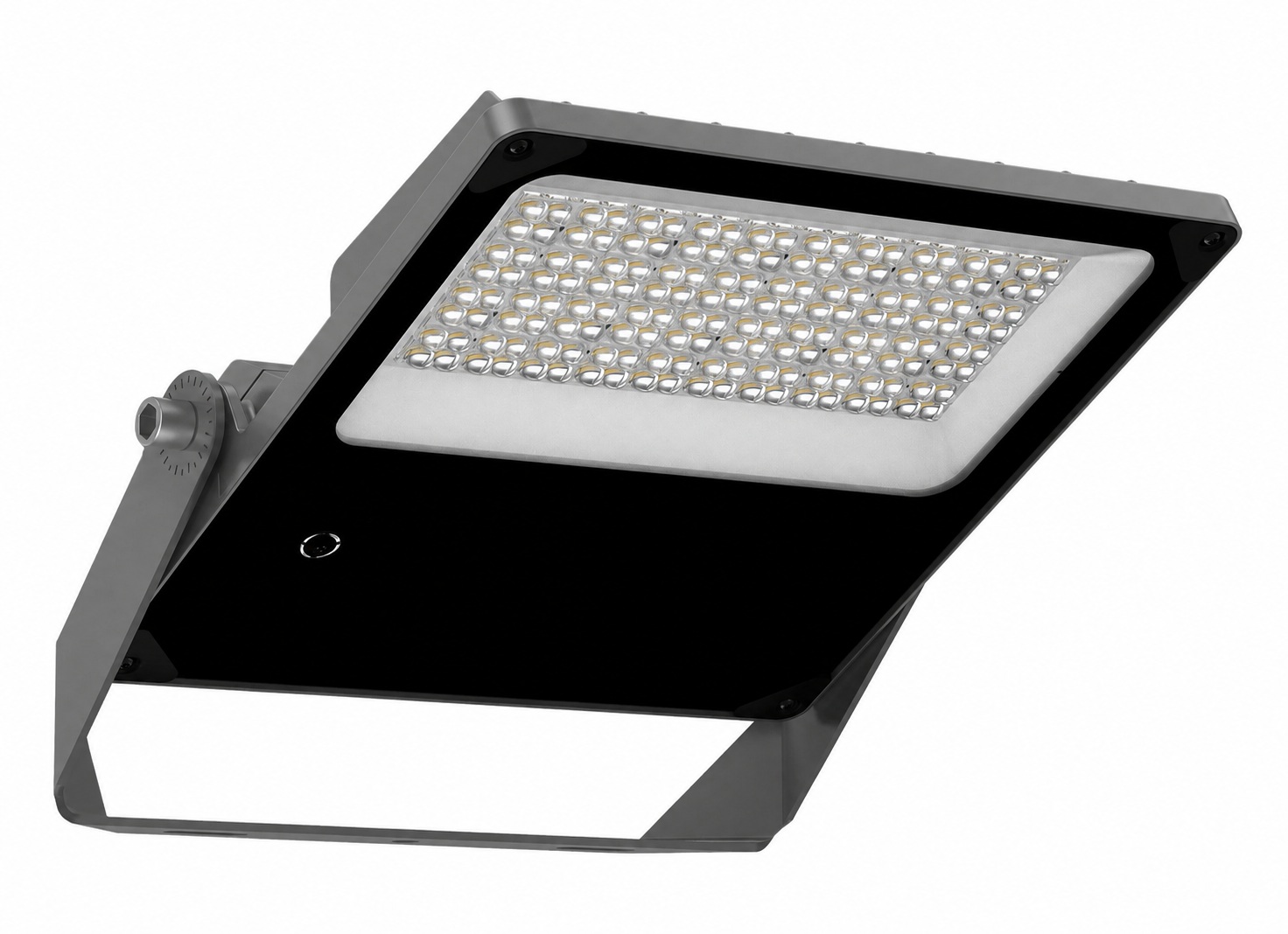
SMASH
For multi-point layouts and moderate mounting heights. The single- and double-court typical studies shown here use a 500 W version.
- optics suited to the setback;
- controlled aiming;
- power confirmed by calculation.
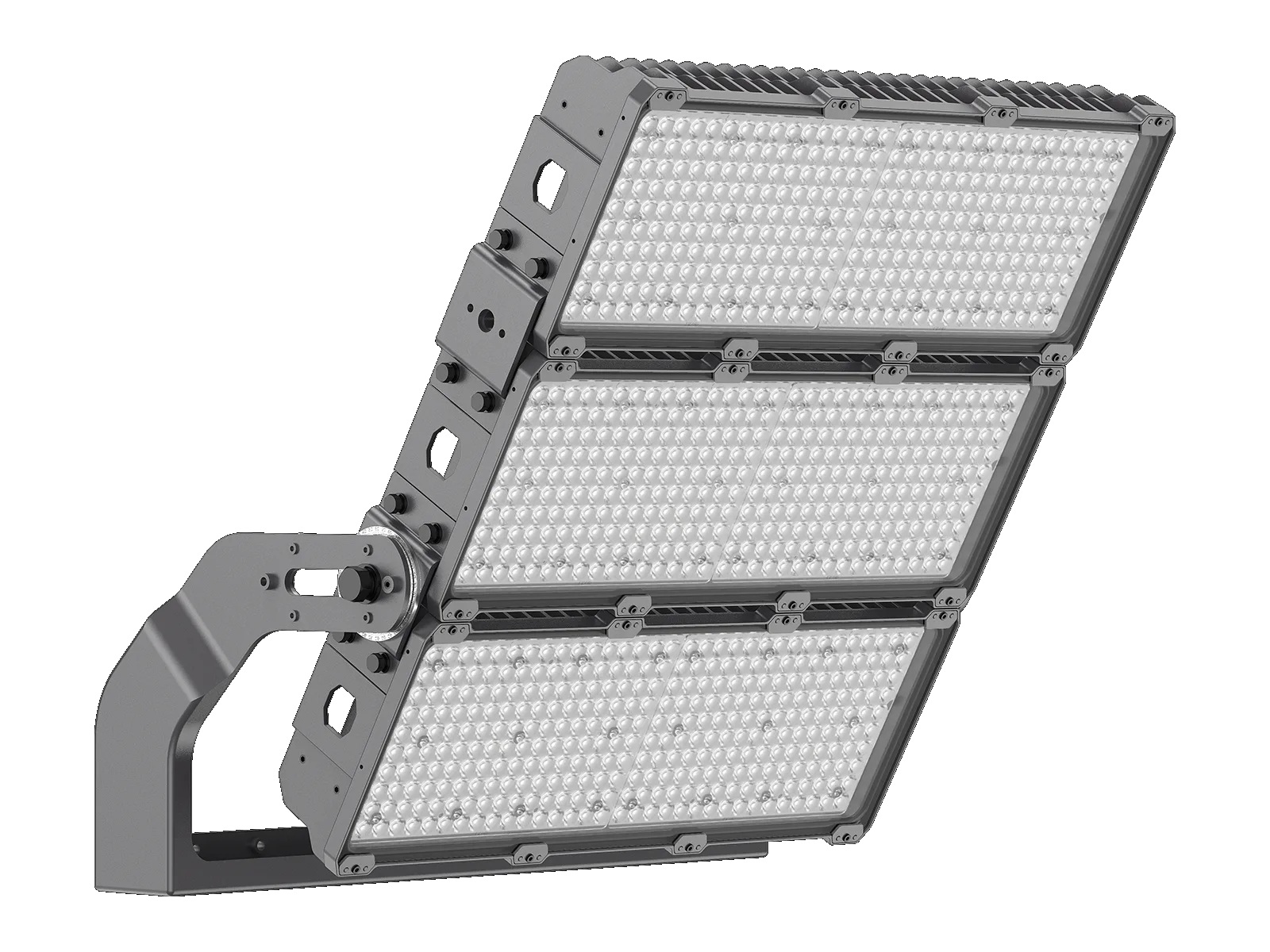
ARENA STADIUM
For greater distances or several courts illuminated from high-mast installations.
- power and optics to be selected;
- weight and windage area to be considered for the pole;
- precise aiming is essential.
Poles and Supports
Match the Floodlight with the Pole and Crossbar
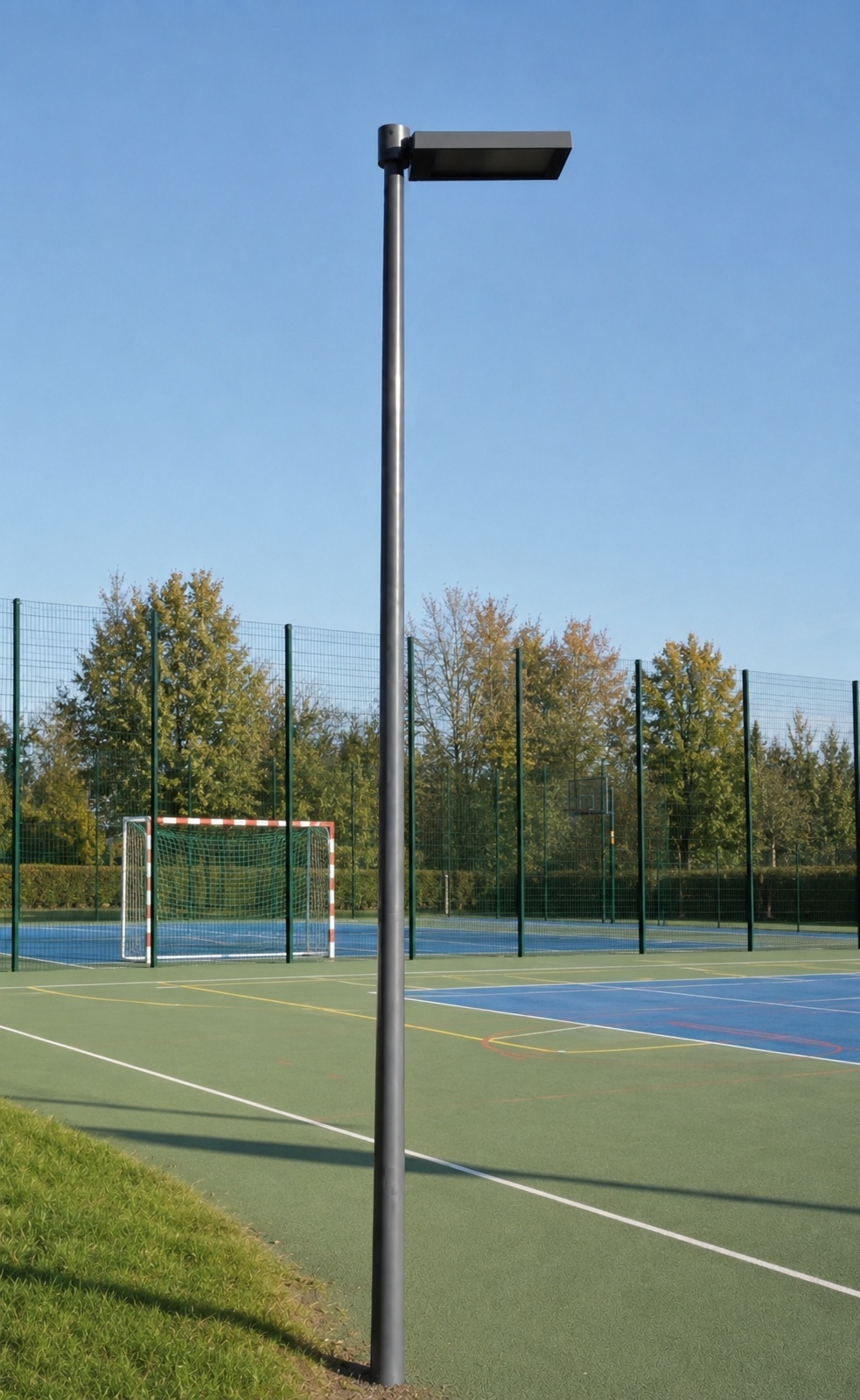
CONICA 20000 Pole
To be considered for moderate-height configurations using SMASH, depending on wind conditions, equipment weight and exposed surface area.
View the CONICA Pole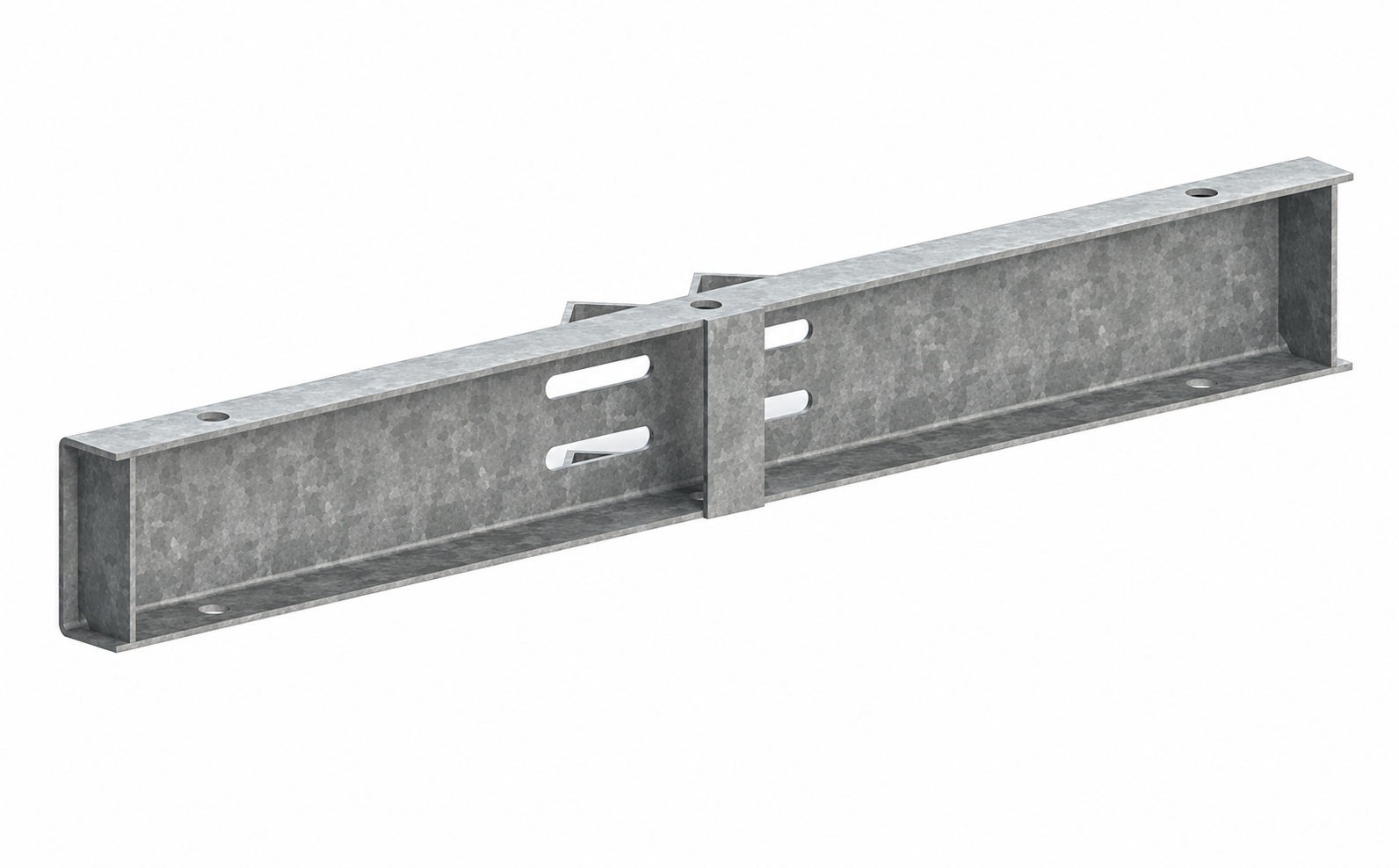
Straight Crossbars
Available in different lengths with single or double clamps. Clamps and load capacity are adapted to the pole and floodlights.
View Straight CrossbarsThis configuration is not based on a CONICA pole around 10 m. It requires a suitable high-mast range checked with ARENA, the crossbar, total weight and windage area.
View SKY / CLIMB Poles →Why Choose STADÉLUM?
Technical support that connects the lighting target, floodlights, poles and actual site constraints.
Outdoor Tennis Expertise
Layout, setback, visual comfort and lighting performance.
Photometric Study
Assessment of lux levels, uniformity and luminaire positioning.
Pole-mounted Solutions
Configurations adapted to the number of courts and required height.
Glare Control
Optics, aiming and heights designed for player comfort.
Energy Optimisation
Installed power adjusted to actual requirements and site conditions.
Project Support
From the initial assessment to equipment selection and aiming preparation.
How to Choose LED Lighting for an Outdoor Tennis Court
Ball visibility depends just as much on light distribution as on the nominal power of the floodlights.
Whether for a single court or several adjacent courts, the choice of floodlights, pole heights and positioning is essential. The installation must achieve the required lighting level while providing suitable visual comfort for players.
STADÉLUM supports clubs, local authorities and facility managers with both new-build and renovation projects.
What Power Is Required to Light an Outdoor Court?
Power depends on the number of courts, height, available setback, optics and required illuminance level.
The configurations shown use SMASH 500 W or ARENA 1800 W, but these values must still be confirmed by calculation.
How Many Poles Are Required?
A typical layout may use four laterally positioned poles, with sufficient setback to cover the court without obstructing players.
The final height and number of poles depend on the actual geometry.
Why Carry Out a Photometric Study?
It makes it possible to check average lux, U0, aiming, optics selection and the consistency of the pole-floodlight combination.
It distinguishes a realistic configuration from a simple power estimate.
FAQ — LED Lighting for Outdoor Tennis Courts
Answers to frequently asked questions about lux levels, floodlights, poles and photometric studies.
How Many Lux Should Be Targeted for an Outdoor Tennis Court?
The target used here is an average of 300 lux with U0 ≥ 0.70. The final level must be confirmed according to the intended use and project specifications.
What Height Should Be Used for Tennis Lighting Poles?
A height of 10 m may be suitable for certain configurations using SMASH. Configurations requiring greater throw distances may require 16 m or another height defined by the study.
How Many Floodlights Are Required for a Single Court?
The typical study shown uses four SMASH 500 W floodlights on four poles. This configuration should not be reproduced without recalculating the actual site.
What Is the Difference Between SMASH 500 W and ARENA 1800 W?
SMASH is suitable for multi-point layouts and moderate heights. ARENA STADIUM is designed for greater distances or higher power requirements.
Is the CONICA Pole Suitable for the 16 m Project?
Not for the typical study presented here. A 16 m configuration requires a high-mast range checked against the complete loads.
Are the Results Shown Based on On-site Measurements?
No. They are typical simulations. Actual performance must be verified through a site-specific study and, where required, measurements after installation.
Your Outdoor Tennis Project
Study the Court Before Choosing SMASH, ARENA or the Pole
Send us the dimensions, available setbacks, planned heights, surrounding constraints and lighting targets.
Request a Preliminary Study